
Fuel Tank Painting Toronto
Fuel tanks are not just another steel tank. Painting them means working around fuel, vapour, and live dispensing, so the safety side matters as much as the coating. Our crews are trained for it, with POST (Petroleum Oriented Safety Training), non-sparking tools where the site calls for them, and a plan built around your yard. We paint above-ground diesel and fuel tanks, plus the stairs, platforms, bollards, and containment around them, at commercial sites and fleet yards. For water, chemical and process tanks, see our storage tank painting.
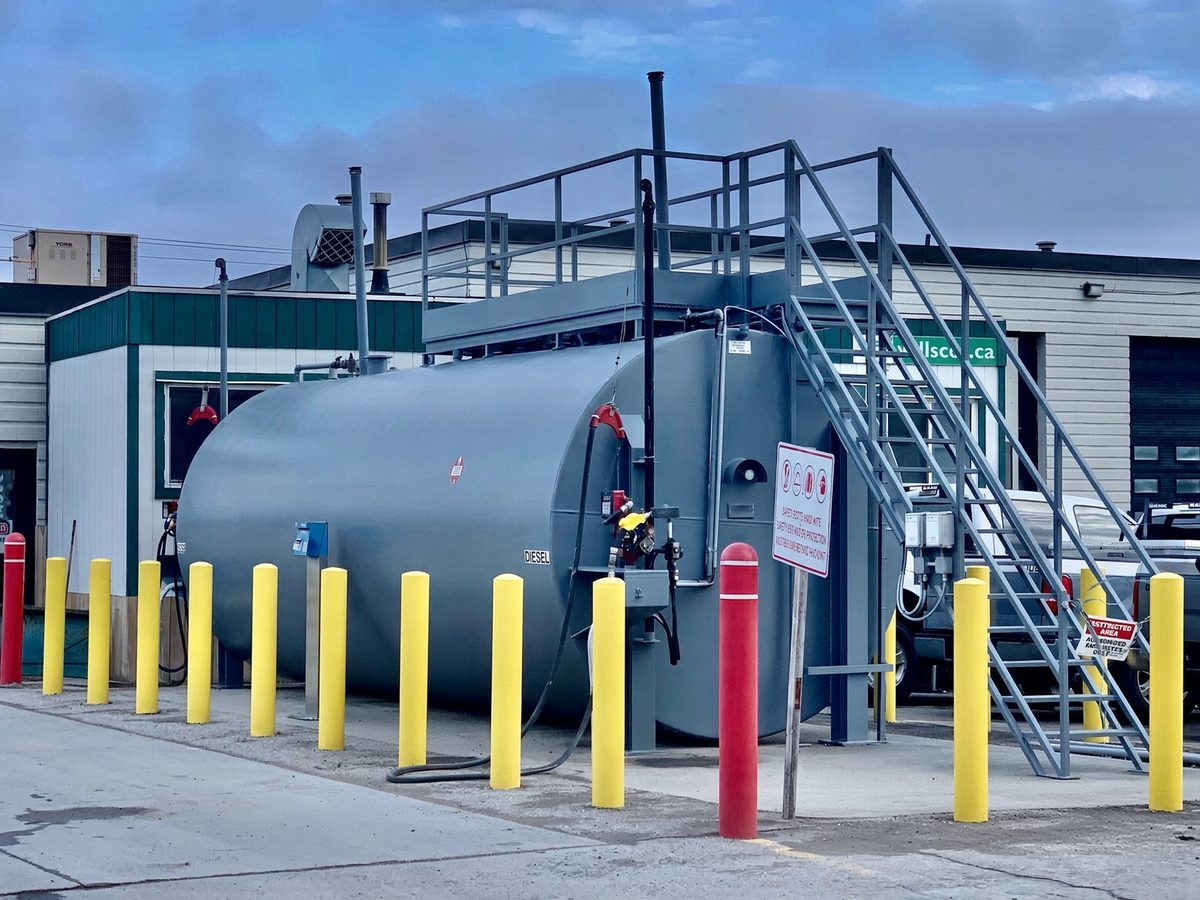
Safety Around Fuel
Every fuel job starts with the hazards, not the paint. We review the site’s safety rules, permits, and vapour risks with your team before anyone opens a can.
Where the site calls for it, we use non-sparking tools and keep hot work under the site’s hot-work rules. Whether the tank stays in service, gets emptied, or gets isolated is decided on site, not assumed.
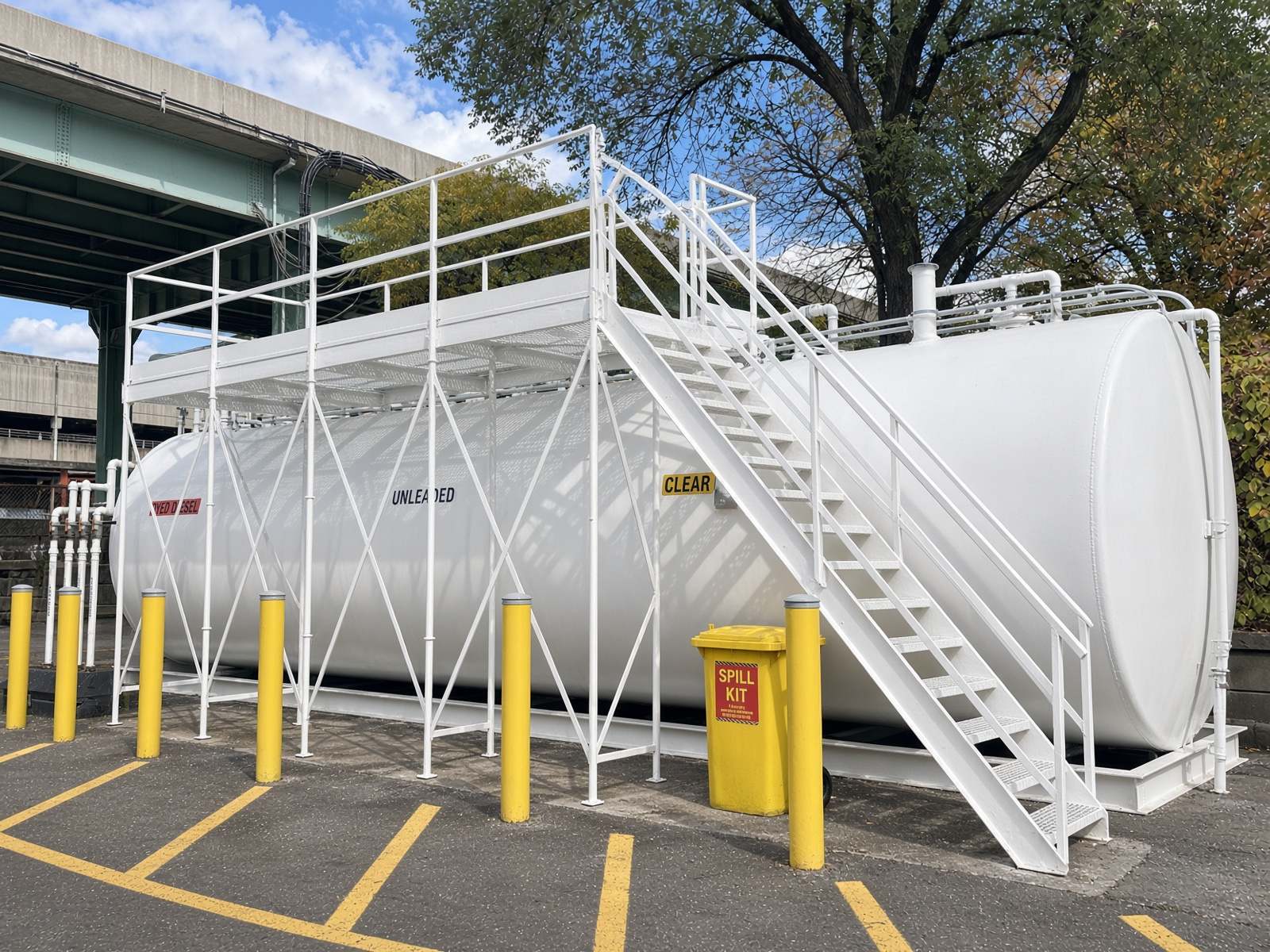
Corrosion Protection & Durability
Fuel tanks sit outside year-round. UV, road salt, and moisture go after the coating first, then the steel at the saddles, welds, and fittings.
We prep properly and match the coating to the tank’s exposure, not a generic outdoor enamel, so the tank holds up and keeps looking maintained. Protecting the inside of the tank is a separate job, covered by our tank lining services.
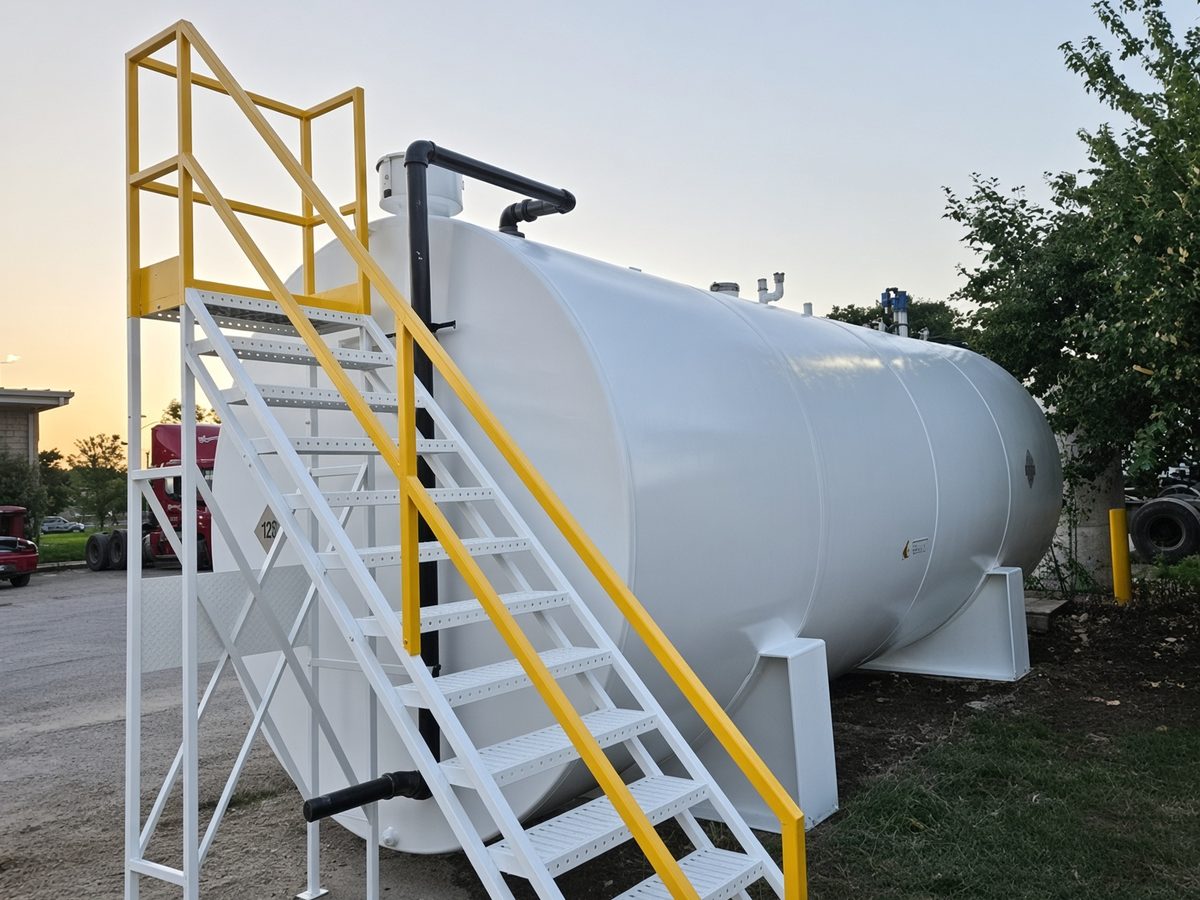
Working Around Active Fleet Yards
Your trucks still need fuel while we work.
We plan around deliveries, dispensing hours, and yard traffic, set clear work zones, and stage the job so the site keeps running.
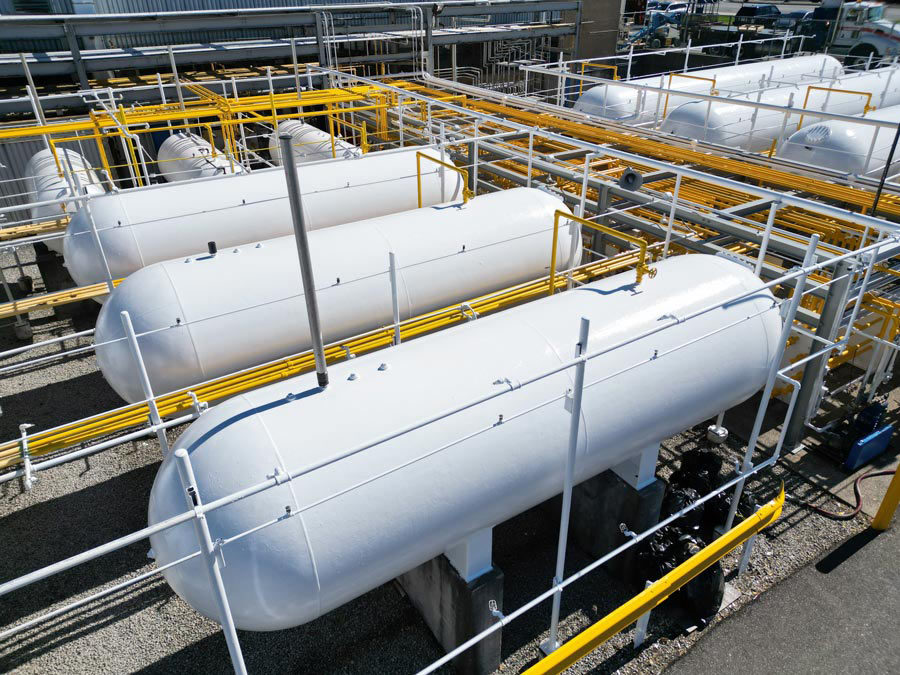
Maintenance & Inspection
A clean, even coating makes rust bloom and damage at nozzles, fittings, and the base easy to spot. Scheduled touch-ups are cheaper than a full repaint or a failed inspection.
We help set a cycle based on the tank’s age, exposure, and last coating, and can back it up with a NACE coating inspection.
Fuel Tank Painting FAQs
Fuel sites need more than a paint crew. Our crews working on fuel tanks hold POST (Petroleum Oriented Safety Training) certification, and they work to your site’s own safety rules and permits from the first day. Before work starts, we review the site’s fuel, vapour, and access hazards with your team so everyone on the yard knows where we are and what we are doing.
Around fuel, a spark is the hazard. Where the site calls for it, we use non-sparking tools and plan the prep so it does not create an ignition source. Hot work only happens where the site’s hot-work rules allow it. We choose prep and application methods around the tank, its contents, and the vapour risk, not around what is fastest.
It depends on the tank, its contents, and the scope. Exterior painting can often be done with the tank in service, while some prep methods or repairs may need the tank emptied or isolated first. We assess the site, review your requirements with your team, and plan the work around them. We do not guess on this one.
Fuel tanks sit outside year-round, so the exterior system has to stand up to UV, moisture, road salt, and corrosion at the saddles, welds, and fittings. We match the coating to the tank’s exposure, not a generic outdoor enamel. We also coat the steel around it: stairs, platforms, railings, bollards, and secondary containment, so the whole fuelling area holds up together.
Yes. Fleet yards and fuelling sites keep moving, so we plan the work around fuel deliveries, dispensing hours, and truck traffic. We set up clear work zones, keep the dispensing area usable where it is safe to do so, and stage the job so your trucks still get fuelled.
A clean, even coating makes rust bloom, chalking, and damage at nozzles, fittings, and the base easy to spot. Small touch-ups caught early are cheaper than a full repaint or a failed inspection. We help set a touch-up and repaint cycle based on the tank’s age, exposure, and last coating, not a calendar guess.