
Tank Painting Toronto
Protective Coatings applied to Industrial Steel Tanks serves several important purposes in various industries, including oil and gas, chemical processing, plastics, water treatment and more. The primary reasons for painting industrial tanks are as follows:
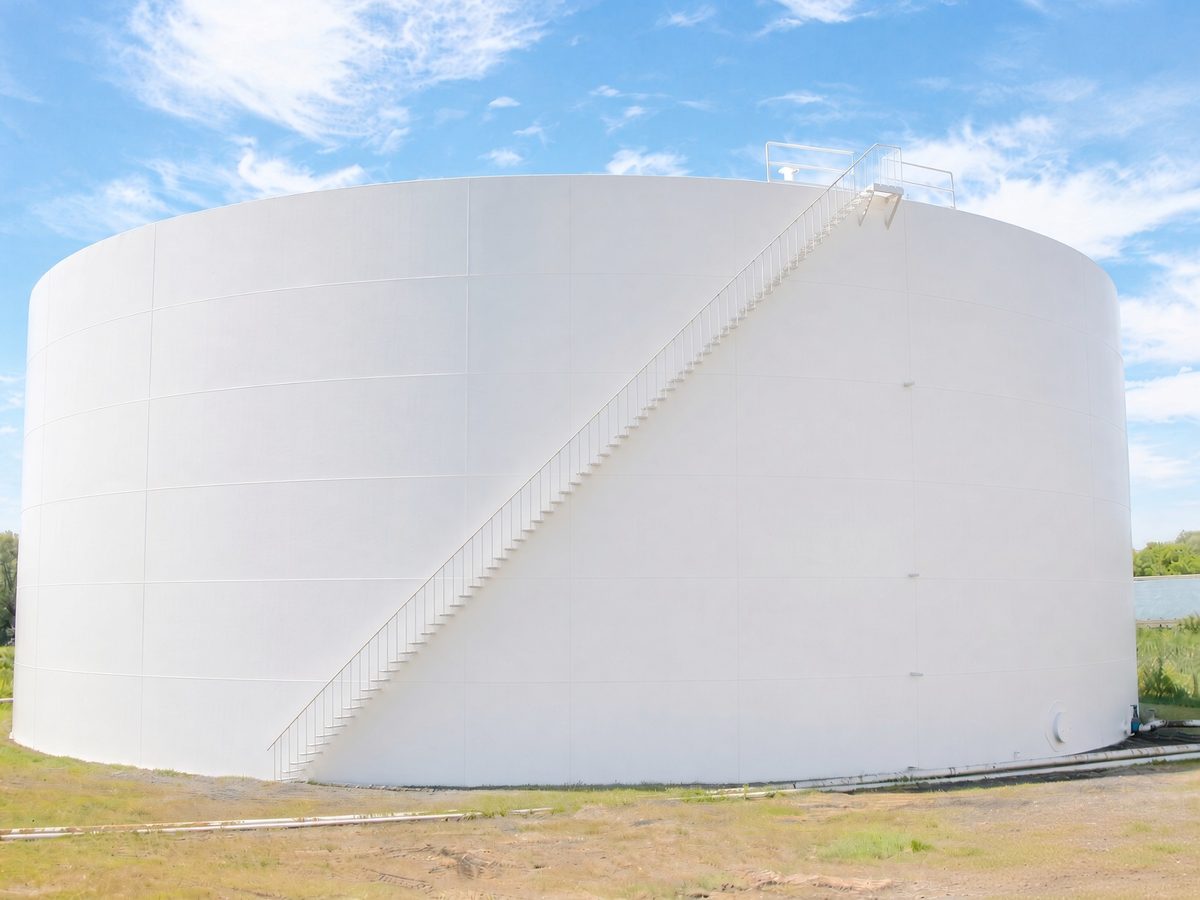
Corrosion Protection & Durability
Steel tanks sit outside year-round. Moisture, road salt, process vapours, and UV all go after the coating first, then the steel.
A proper tank coating system starts with surface prep (blasting, cleaning, priming) and a spec built for that tank’s exposure, not a generic outdoor enamel. That film is what keeps rust from starting at welds, saddles, and pipe connections.
On a farm of horizontal tanks like this, we coat the vessels and the steel around them: pipe racks, supports, railings, and walkways. One failed patch becomes a leak path. A tight, even system buys years before the next full repaint.
Aesthetic Improvement & Insulation
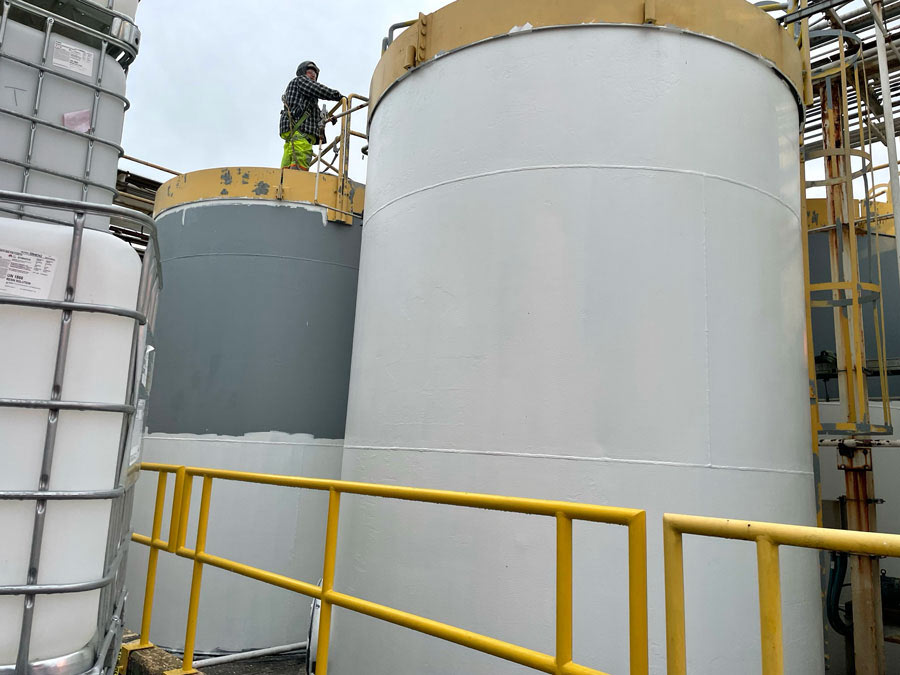
A weathered tank reads as deferred maintenance. A clean, even finish does the opposite, especially on sites that sit next to roads, neighbours, or customer parking.
The photo is a job in progress for a reason. We stage the work so one vessel can stay in service while the next is prepped and coated, and we work from the top down with fall protection in place.
Where temperature control matters, we can specify insulating or solar-reflective coatings that cut heat gain and help stabilize stored product. The right system looks finished and does a job underneath.
Environmental Protection & Compliance
Process tanks carry more than product. They carry labelling, colour codes, and inspection requirements.
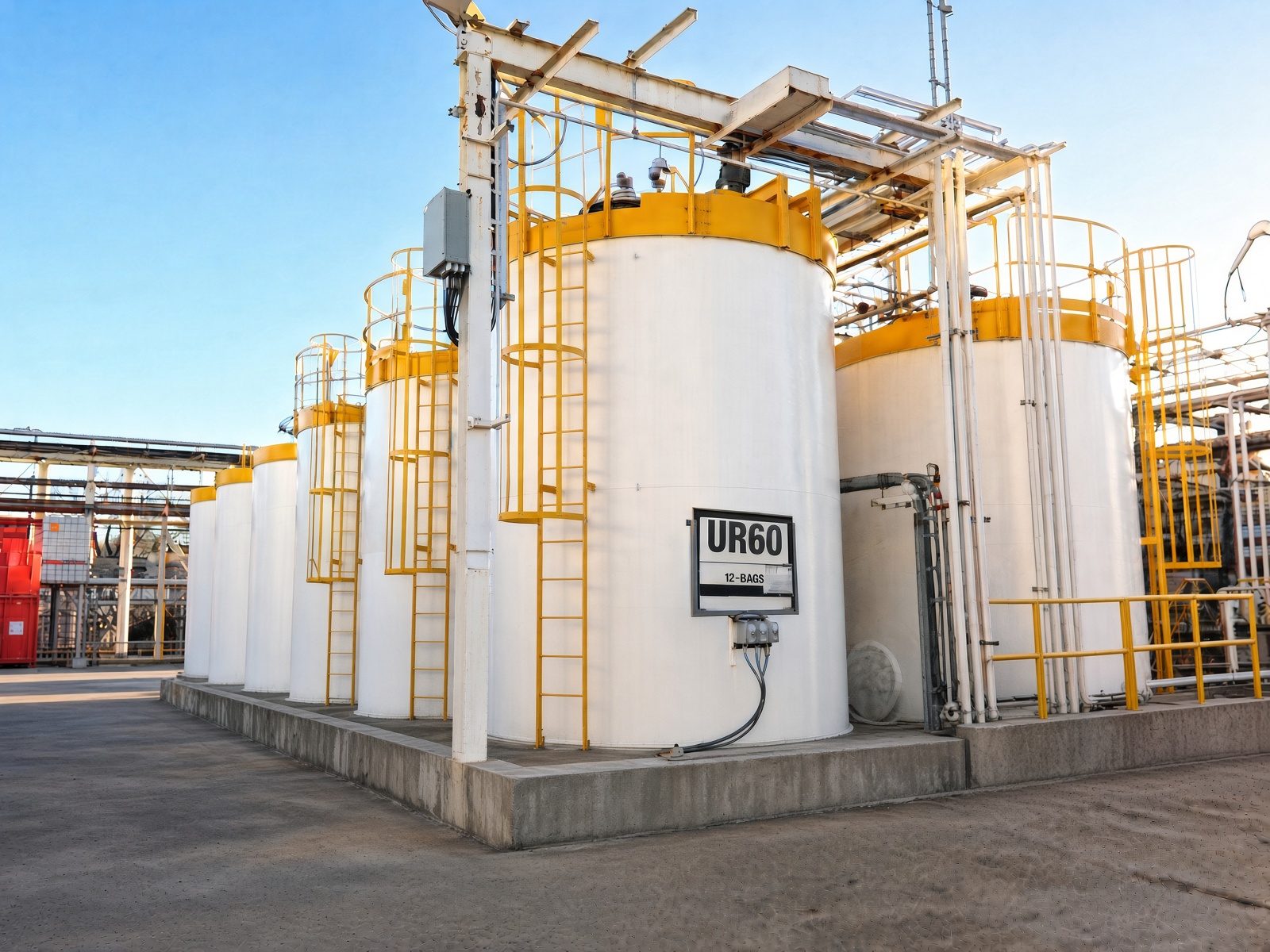
We paint to the spec the facility needs: body colour, safety yellow on ladders, cages, and guardrails, and a finish that holds stencils, NFPA diamonds, and content IDs so they stay readable.
A sound exterior coating also protects the shell. That is what keeps weather and corrosion from becoming a containment problem. We plan around live plants so coating work does not create the spill or shutdown you are trying to avoid.
Maintenance & Inspection
Once tanks are coated, they are easier to walk, clean, and inspect. Chalking, rust bloom, and failed caulk show up against a uniform film long before they become a hole.
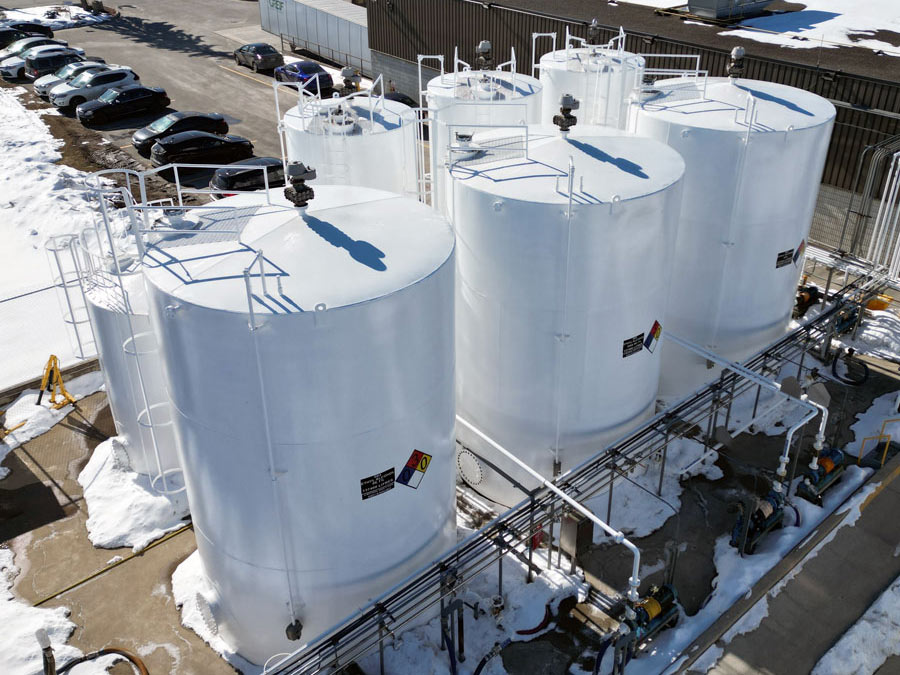
Ontario winters are a good test. Snow, freeze-thaw, and wet concrete pads are hard on steel at the base ring and on nozzles. A maintained coating, plus scheduled touch-up, is cheaper than an emergency reline or a failed inspection.
We help facilities set a repaint cycle based on the tank’s contents, exposure, and last prep, not a calendar guess. If you already have a cluster like this, a walk-down is the fastest way to see what can wait and what cannot.
Storage Tank Painting FAQs
Protective coatings on industrial steel tanks serve corrosion protection, durability, appearance, insulation where needed, environmental protection, compliance labelling, and easier maintenance and inspection. Industries include oil and gas, chemical processing, plastics, water treatment, and more.
Steel tanks sit outside year-round. Moisture, road salt, process vapours, and UV attack the coating first, then the steel. A proper tank coating system starts with surface prep (blasting, cleaning, priming) and a spec built for that tank’s exposure, not a generic outdoor enamel. That film keeps rust from starting at welds, saddles, and pipe connections. We also coat related steel: pipe racks, supports, railings, and walkways.
Yes. We stage the work so one vessel can stay in service while the next is prepped and coated, and we work from the top down with fall protection in place. Where temperature control matters, we can specify insulating or solar-reflective coatings that cut heat gain and help stabilize stored product.
Process tanks carry labelling, colour codes, and inspection requirements. We paint to the facility spec: body colour, safety yellow on ladders, cages, and guardrails, and a finish that holds stencils, NFPA diamonds, and content IDs so they stay readable. A sound exterior coating protects the shell so weather and corrosion do not become a containment problem, and we plan around live plants to avoid creating the spill or shutdown you are trying to prevent.
Once coated, tanks are easier to walk, clean, and inspect—chalking, rust bloom, and failed caulk show up against a uniform film before they become a hole. Ontario winters are hard on steel at the base ring and nozzles. A maintained coating plus scheduled touch-up is cheaper than an emergency reline or a failed inspection. We help set a repaint cycle based on the tank’s contents, exposure, and last prep, not a calendar guess.