Industrial Painting vs. Industrial Coatings: What’s the Difference?
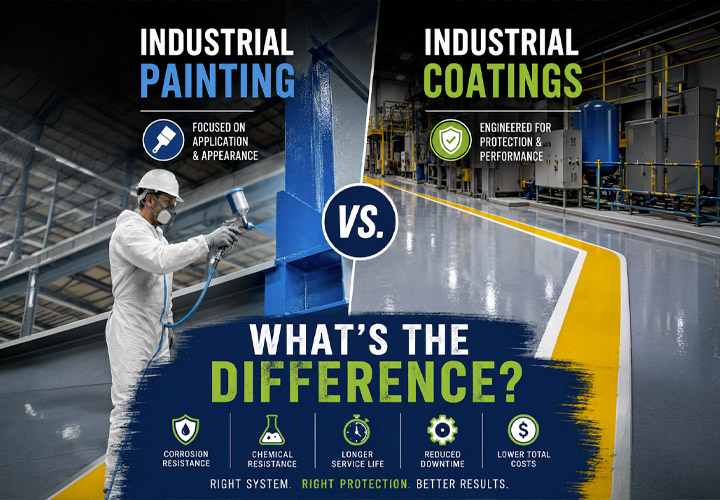
Industrial painting and industrial coatings are often treated as the same thing. They are closely related, but they are not always interchangeable.
Industrial painting usually focuses on applying a protective and decorative finish to a surface. Industrial coatings are engineered systems designed to protect equipment, structures, floors, tanks, steel, concrete and other surfaces from specific operating conditions.
The difference matters because choosing the wrong product can lead to premature failure, corrosion, contamination, shutdowns and expensive repairs.
What Is Industrial Painting?
Industrial painting is the process of preparing and painting surfaces in factories, warehouses, commercial facilities and industrial environments.
The work may include:
- Cleaning and degreasing
- Removing rust or loose paint
- Sanding, grinding or abrasive blasting
- Applying primers
- Applying one or more finish coats
- Colour-coding equipment, pipes or safety zones
Industrial paint can improve appearance, increase visibility and provide a practical level of protection against moisture, wear and corrosion.
However, not every industrial paint is designed to withstand chemicals, high heat, constant moisture, food-production requirements or heavy mechanical abuse.
What Are Industrial Coatings?
Industrial coatings are specialized protective materials formulated for particular surfaces and environmental conditions.
They are commonly used to protect:
- Structural steel
- Machinery and equipment
- Concrete floors
- Tanks and silos
- Pipelines
- Metal roofs
- Production areas
- Food-processing facilities
- Wastewater and chemical environments
Industrial coating systems may include primers, intermediate coats and topcoats that work together as a complete protective system.
Common industrial coatings include:
- Epoxy coatings
- Polyurethane coatings
- Zinc-rich primers
- Elastomeric coatings
- High-temperature coatings
- Chemical-resistant coatings
- Food-grade and hygienic coatings
- Anti-corrosion systems
The goal is not simply to make the surface look better. The coating must perform under the conditions found in the facility.
The Main Difference
The main difference is the level and type of protection being provided.
Industrial painting often refers to the overall application process.
Industrial coatings refer more specifically to the engineered products and systems used to protect the surface.
A surface may be industrially painted using a basic primer and topcoat. Another surface may require a multi-layer coating system designed to resist chemicals, abrasion, heat or corrosion.
In practical terms, all industrial coating work involves painting or application, but not all industrial painting provides the performance of a specialized industrial coating system.
Appearance vs. Performance
One of the easiest ways to understand the difference is to look at the purpose of the project.
A basic industrial painting project may focus on:
- Improving appearance
- Refreshing faded surfaces
- Creating a cleaner working environment
- Applying company colours
- Marking equipment or safety areas
An industrial coating project may need to:
- Prevent corrosion
- Resist chemical exposure
- Withstand forklift traffic
- Protect against moisture
- Tolerate temperature changes
- Meet hygiene or sanitation requirements
- Extend the service life of equipment or structures
Appearance still matters, but performance is usually the primary concern.
Surface Preparation Is Critical for Both
Industrial paint and coatings can fail when the surface is not properly prepared.
Common preparation methods include:
- Pressure washing
- Solvent cleaning
- Degreasing
- Power-tool cleaning
- Grinding
- Shot blasting
- Abrasive blasting
- Removing failed coatings
- Repairing cracks or damaged concrete
The correct preparation method depends on the substrate, the existing coating, the new coating system and the conditions inside the facility.
Even a premium coating will fail if it is applied over dirt, oil, corrosion, moisture or loose material.
Different Coatings for Different Conditions
There is no single industrial coating that works everywhere.
Epoxy Coatings
Epoxy coatings provide strong adhesion, chemical resistance and durability. They are commonly used on concrete floors, steel and equipment.
However, some epoxies can chalk or fade when exposed to direct ultraviolet light, which means they may require a UV-resistant topcoat outdoors.
Polyurethane Coatings
Polyurethane coatings are often used as durable topcoats. They provide good colour retention, abrasion resistance and resistance to weathering.
They are commonly used on structural steel, machinery and exterior industrial surfaces.
Zinc-Rich Primers
Zinc-rich primers help protect steel from corrosion. They are often used as part of a multi-coat system on structural steel, tanks, bridges and exposed metal.
Elastomeric Coatings
Elastomeric coatings create a flexible protective membrane. They are often used on roofs, masonry and surfaces that experience movement or minor cracking.
High-Temperature Coatings
High-temperature coatings are designed for pipes, boilers, stacks and equipment exposed to elevated temperatures.
Using a standard paint in these conditions can lead to blistering, discolouration or rapid coating failure.
Hygienic and Food-Grade Coatings
Food-processing, pharmaceutical and institutional environments may require coatings that are washable, low-odour, moisture-resistant and suitable for strict sanitation procedures.
The selected product must match the facility’s operational and regulatory requirements.
Durability and Service Life
Basic industrial paint may provide suitable protection in a low-risk environment, but it may not last under aggressive industrial conditions.
Specialized industrial coatings can provide longer service life when properly specified and applied. Their performance depends on:
- Surface preparation
- Coating thickness
- Number of coats
- Application conditions
- Curing time
- Exposure to chemicals or moisture
- Temperature and humidity
- Ongoing maintenance
A cheaper product is not necessarily less expensive over the life of the facility. Frequent recoating, shutdowns and repairs can quickly outweigh the initial savings.
Why Coating Thickness Matters
Industrial coatings are often specified according to their dry film thickness.
Dry film thickness is the thickness of the coating after it has fully dried or cured.
If the coating is too thin, it may not provide adequate protection. If it is applied too heavily, it may cure improperly, crack, sag or trap solvents.
Professional industrial painting contractors use the manufacturer’s specifications and may measure coating thickness during the project to help confirm that the system has been applied correctly.
When Is Standard Industrial Painting Enough?
A straightforward industrial painting system may be suitable when:
- The environment is dry and temperature-controlled
- Chemical exposure is limited
- The surface experiences light wear
- The main goal is appearance or colour identification
- The existing coating is still in reasonable condition
- Corrosion risk is low
Examples may include office areas inside industrial facilities, lightly used storage rooms, utility spaces or certain warehouse walls and ceilings.
When Is a Specialized Industrial Coating Needed?
A performance coating system may be required when the surface is exposed to:
- Chemicals
- Constant moisture
- Salt or corrosive conditions
- Heavy abrasion
- Vehicle or forklift traffic
- High temperatures
- Frequent washing
- Food-production processes
- Exterior weather
- Aggressive industrial contaminants
These projects require careful product selection and a clear understanding of the facility’s operating conditions.
Industrial Painting and Coatings Should Be Treated as a System
The best results come from treating the project as a complete system rather than simply choosing a can of paint.
A professional coating system may include:
- Surface inspection
- Cleaning and preparation
- Repairs to damaged areas
- Corrosion-control primer
- Intermediate protective coat
- Performance topcoat
- Inspection and quality-control testing
Every layer has a job to do.
Skipping one step can reduce the performance of the entire system.
Common Mistakes When Selecting Industrial Paint or Coatings
Some of the most common mistakes include:
- Choosing a product based only on price
- Ignoring chemical exposure
- Applying a coating over moisture or contamination
- Using interior products outdoors
- Failing to consider operating temperatures
- Applying insufficient coating thickness
- Rushing the curing process
- Recoating without identifying why the previous system failed
A proper site assessment should take place before the coating system is selected.
Which Option Does Your Facility Need?
The answer depends on the surface and the conditions it must withstand.
For a low-exposure area, a conventional industrial painting system may be suitable.
For steel, floors, tanks, production areas, roofs or high-moisture environments, a specialized industrial coating system may provide better protection and longer service life.
The contractor should evaluate:
- The substrate
- Existing coating condition
- Environmental exposure
- Cleaning procedures
- Temperature
- Moisture
- Chemical contact
- Expected traffic or abrasion
- Required shutdown schedule
This information helps determine the correct preparation method, primer, coating type and application process.
Industrial Painting and Coating Services in Southern Ontario
BEST Painting provides industrial painting and protective coating services throughout Toronto, the GTA and Southern Ontario.
Our team works with industrial facilities, warehouses, manufacturing plants, food-processing environments and commercial properties to select and apply coating systems suited to the surface and operating conditions.
Services include:
- Structural steel painting
- Industrial floor coatings
- Epoxy coating systems
- Machinery and equipment painting
- Tank and silo coatings
- Metal roof coatings
- Hygienic and food-grade coatings
- Corrosion-control systems
- Interior and exterior industrial painting
Request an Industrial Coating Assessment
The right industrial coating system can protect your facility, reduce maintenance costs and help prevent premature surface failure.
Contact BEST Painting to arrange an assessment of your industrial painting or coating project.